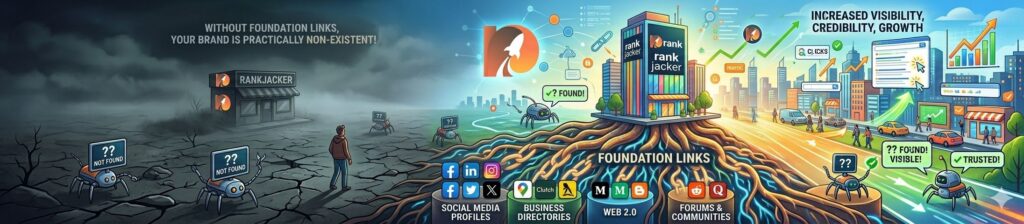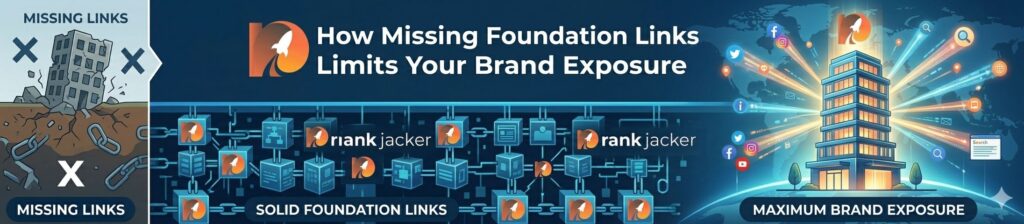
When it comes to search engine optimization (SEO), foundation links are like the rebar in a concrete structure—unseen, but critical to the overall integrity and strength of your website’s SEO strategy.
Yet, one of the most common questions asked by webmasters and SEO professionals is, “How many foundation links does my website actually need?”
Let’s unpack this in detail. By the time you finish this article, you’ll understand what foundation links are, why they matter, how many you really need, and how to build them the right way.
What Are Foundation Links?
Before diving into the “how many,” let’s tackle the “what.”
Foundation links are the initial set of backlinks created to establish a baseline authority and trust for a website in the eyes of search engines. These links are typically:
- From high-authority, low-risk sources
- Unoptimized or branded anchor text (not keyword-stuffed)
- Built from a diverse range of foundational platforms like business directories, social profiles, press releases, blog comments, and citation sites
In simple terms, foundation links make your site look real and trustworthy—like a legitimate business, not a spammy fly-by-night operation.
Why Foundation Links Matter
Think of Google as a very strict librarian. If your site suddenly starts acquiring high-powered keyword-optimized backlinks from top blogs without any basic credibility markers (foundation links), the librarian raises an eyebrow.
Without foundational links:
- Your site may appear manipulative or unnatural.
- Your future link-building efforts may not pass the necessary trust filters.
- You risk penalties, sandboxing, or simply being ignored in rankings.
With them:
- Google sees you as legitimate.
- You build trust and crawl pathways for your site.
- You establish the base authority needed for future link building to be effective.
Want to see what foundational links look like in practice? Download a free sample report and learn how to build authority the right way.
So, How Many Foundation Links Do You Really Need?
Here’s the million-dollar question.
There’s No One-Size-Fits-All Number.
But that doesn’t mean we can’t work with estimates and logic. The number of foundation links your site needs depends on several key factors:
1. The Age of Your Website
- Brand new sites: Need more foundation links to establish credibility.
- Older domains: May already have some natural foundational links and need fewer additions.
Typical range for new websites: 30 to 80 foundation links over the first 2–3 months.
2. Your Industry and Competition
SEO is relative. If your competitors have 200 foundational links from citations, social profiles, forums, and local business listings, and you have 10—you’re not playing the same game.
Audit your top 5 competitors. Tools like Ahrefs, SEMrush, or even free backlink checkers can show you how many foundational links they have. Match or slightly exceed them with quality, not quantity.
3. Your Link-Building Goals
Are you planning a full-scale SEO campaign with guest posts, digital PR, and niche edits?
If so, it’s crucial to front-load your strategy with at least 40–60 solid foundation links to prepare your site for more powerful link injections down the line.
But if you’re keeping it light, you may get away with 20–30 well-placed links.
4. Your Site Type
- Local service business: Needs strong foundation links through local directories, citations, and Google My Business.
- Affiliate site/blog: Needs broader trust signals from web 2.0s, forums, niche communities, and branded profiles.
- E-commerce store: Should prioritize brand profile links, review sites, and press mentions.
Types Of Foundation Links You Should Build
Let’s categorize the key link types that should be in your foundation portfolio:
1. Social Media Profiles
- YouTube
Even if you’re not active on them, just having profiles with links builds trust.
2. Business Directories
- Yelp
- Foursquare
- YellowPages
- Crunchbase
- Chamber of Commerce
These validate your business’s existence in the real world.
3. Web 2.0 Blogs
Create mini branded blogs on platforms like:
- Medium
- Blogger
- WordPress.com
- Tumblr
Keep them clean, not spammy. Add some genuine content.
4. Citation Listings (Especially for Local SEO)
Sites like:
- BrightLocal
- Moz Local
- Whitespark
Let you get listed in dozens of high-trust directories with consistent NAP (Name, Address, Phone).
5. Press Releases
Distributing a press release through reputable PR platforms creates instant credibility and a batch of safe backlinks.
6. Forum Profiles and Niche Communities
Get involved (authentically) in relevant forums and drop a branded link in your profile or signature.
7. Google-Owned Properties
Make sure you’re linking out from:
- Google My Business
- Google Sites
- Google Drive (with public documents)
- Google Calendar
These are ultra-safe and send strong trust signals.
When Should You Build Foundation Links?
The best time to build foundation links is early—preferably in the first few weeks of launching a website. But they’re also useful if:
- You’re about to begin a link-building campaign
- You’ve never done SEO properly before
- You’ve been penalized or sandboxed and need to rebuild trust
Avoid dumping 50 links in a day. Drip-feed them steadily over 2–4 weeks. Think of it as seasoning your site before cooking the main course.
How To Track the Impact Of Foundation Links
While foundation links don’t typically push rankings like high-powered backlinks, they’re the silent support team.
Look for signs like:
- Faster indexing of new pages
- Improved domain trust metrics (check Moz’s DA, Ahrefs’ DR, etc.)
- Smooth crawling in Google Search Console
- More keyword impressions in GSC
- Steadier ranking movement after launching link campaigns
Mistakes To Avoid
Don’t just spam low-quality directories. Google can spot junk a mile away.
Avoid:
- Over-optimized anchor text
- Duplicate content across Web 2.0s
- Buying links from shady Fiverr gigs labeled “500 backlinks in 1 day!”
Instead, focus on diversity, brand safety, and manual quality.
Final Thoughts: Quality Over Quantity (Always)
The real question isn’t just how many foundation links you need—it’s how good and relevant those links are.
A small batch of 40–60 clean, branded, diverse foundation links can do more than 200 spammy ones.
So take the time to do it right. Think long-term. Lay a rock-solid SEO foundation, and the rest of your strategy will have a better chance to succeed.
Remember: You wouldn’t build a skyscraper without laying a deep foundation. The same goes for your website.
Start with the foundation. Build upwards with confidence.